Text by Yuna Kim. Images courtesy of Photoville.
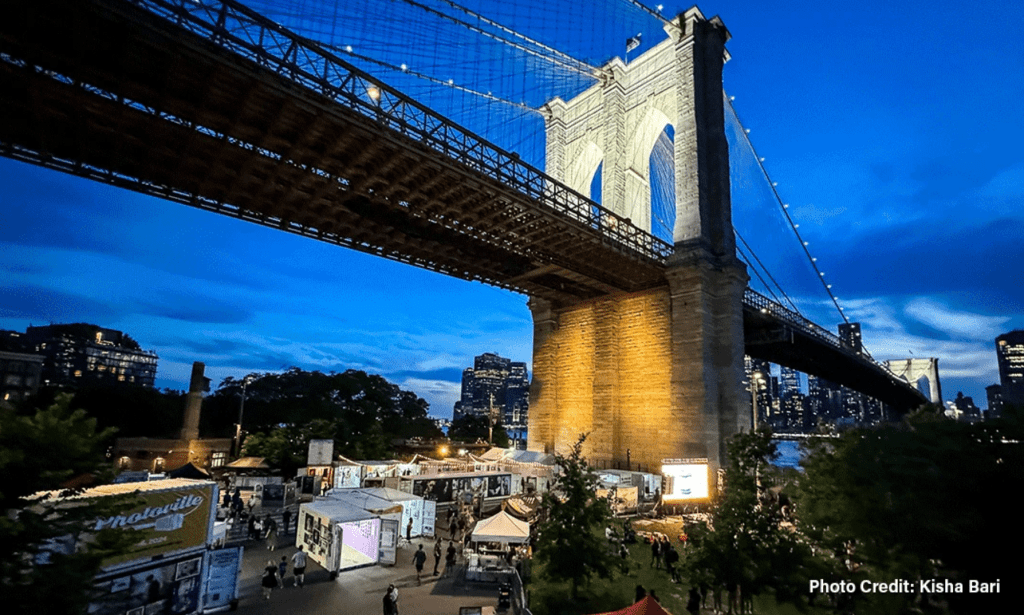
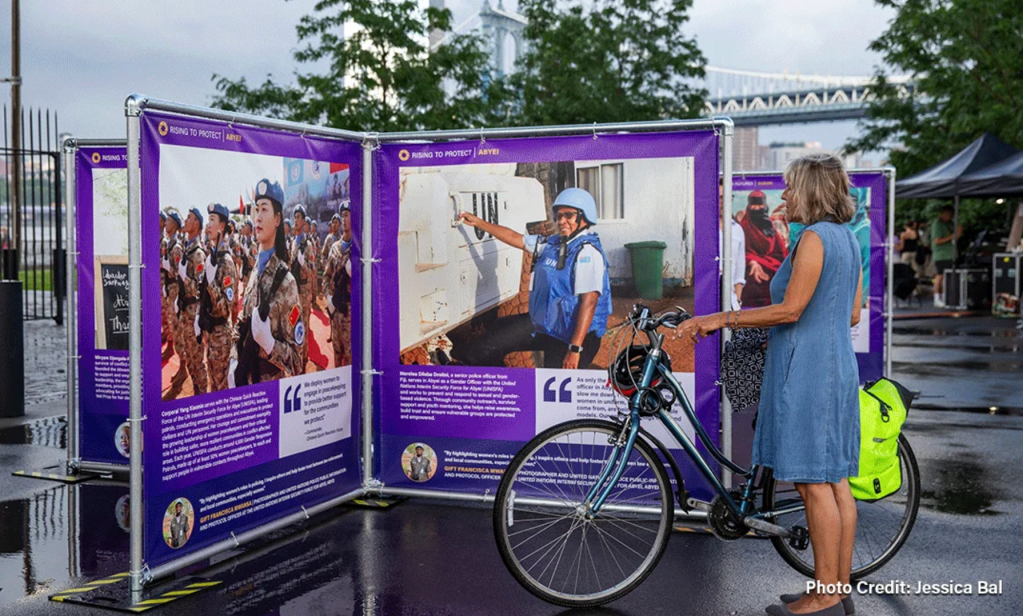
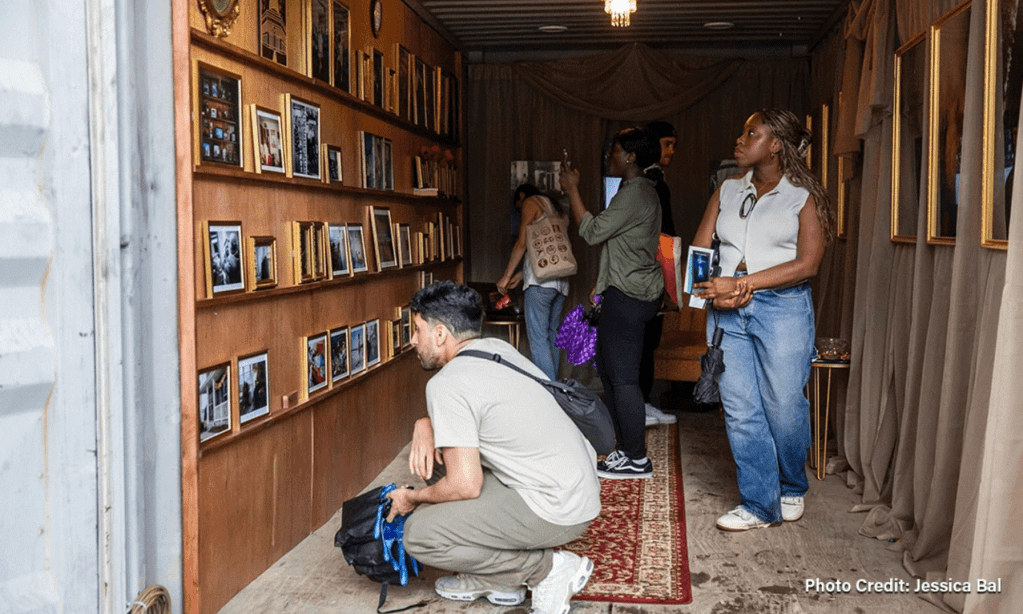
Photoville, a New York-based nonprofit organization dedicated to supporting the global photography community, is coming up on their 15th year of transforming outdoor shipping containers into polished photo exhibits for their annual Photoville Festival in Brooklyn Bridge Park.
Now one of the world’s most anticipated free photo festivals with over 1,000 applications vying for a coveted spot, the Photoville festival is curated by Laura Roumanos — a powerhouse in her own right in New York City’s art scene. In addition to co-founding Photoville, Roumanos’s tenures include St. Ann’s Warehouse and the Manhattan Theatre Club, as well as producing shows for the likes of Spike Jonze and Karen O of the Yeah Yeah Yeahs.
Photoville, however, remains her bread and butter.
Since co-founding Photoville, Roumanos’s mission remains steadfastly the same: To ensure diversity in their programming and to keep the art of photography, and storytelling, alive.
Deep in the midst of preparing for the Photoville festival, Roumanos shares a peek into what it takes to make a globally renowned photography exhibition during a time when arts-focused nonprofit organizations are increasingly becoming targets of political scrutiny.
Please introduce yourself and what you do at Photoville.
I’m Laura Roumanos, co-founder and former executive director.
Could you talk a bit about Photoville’s mission?
We amplify visual storytellers and connect them to a worldwide, diverse audience through multiple different initiatives, such as our free annual photo festival that happens in New York City, our education programming and our community programming. We also produce public art projects throughout the country and globally — working with organizations, corporate companies, nonprofits, independent curators and photographers.
I want to talk a bit about how you support photographers, especially because the annual Photoville festival is coming up in May. What is the process of selecting photographers to showcase in the Photoville festival like?
Every year, we put out a call for proposals to make it an even playing field. The first few years – if you were a photographer we knew, you could pitch us. But we didn’t have a formal way that photographers we didn’t know could actually make sure that their work was seen. So, I would say it was about 11 years ago, we decided to start a proposal — like a submission process — which is really incredible because every year we get over 1,000 proposals. Over half of them are folks we’ve never heard from, work we’ve never seen. And that’s what makes it exciting and also a very democratic process.
We also do individual outreach to different organizations and individuals. There’s a photographer that Sam, our creative director, has really enjoyed his work. He actually bought their book a year ago, and just kept going back to the book and kept going back to the photographs. So Sam just reached out to that photographer and now we’re going to share that work!
When you’re selecting photographers, is there anything specific in their work you’re looking for?
Originality. The big question is “Have we seen this before?”
And if we have, we go, “Well, is this a different angle to the story?”
Like, obviously, aesthetically, we want it to look good, but for us, it’s really about the storytelling. What we’re really looking at is originality, a new story. We’re looking for a surprise, for discovery. And of course, something that we, and I think a lot of folks back in the day weren’t really taking into account, is that we actually need to make sure that that person — the photographer — is a good person.
Our life is too short. There are quite a few people and photographers who may not be nice people but they may be great photographers. But if they’re not nice, if they’re not good to work with, then we don’t want to work with them.
How has that selection process changed considering the social, political, economic climate of the United States right now?
We haven’t really changed our process, to be honest. We’ve always been very much about who tells that story so we’ve always prided ourselves on making sure we have a diverse roster of photographers that reflects the world we live in. So it’s not just in the US, but also abroad.
Sometimes we’ve had to think about “Will there be any ramifications politically or financially?”
But as a nonprofit, we can’t think politically. We’re not activists. We’ve always had to say that to people. We are not an activist organization. We’re a nonprofit; we’re not allowed to be. We’ve had a few exhibitions the last few years where some people could deem controversial. We don’t, but others could, and we have had either funding pulled or people not give us money.
But you know what? We didn’t want their money anyway. We try to stay true to ourselves.
A lot of people believe art is political, and you were saying that Photoville is not political. What are your thoughts on that statement?
Art can be political. Artists themselves should be able to speak freely.
As a nonprofit, the whole point is that we are tax exempt. We should not be swayed by one political party or another.
But we still have our morals, we have our ethics, and that’s what drives us. Even if someone may think one particular issue is political, that’s because someone made it political. The idea of housing or a woman’s right to choose should not be political. It’s just a human right.
So what’s next for Photoville?
It’s our 15th year! We are in the middle of planning, programming and restructuring our staffing. We’re in a very, you know, a very fragile economic state, so we’re trying to be really efficient and smart about how we program and we tackle staffing and resources.
But we take it one year at a time. We’re just really focused on this year.
 Dreams Are Made Of
Leave a comment