Text by Racquel Miller. Images courtesy of Sarah Yuster.
A resident of Staten Island, Sarah Yuster is known for her paintings capturing the serene mood of the borough across the river.
At 12, she attended New York City’s High School of Art & Design, where she learned the rudiments of painting. She later trained at the School of Visual Arts.
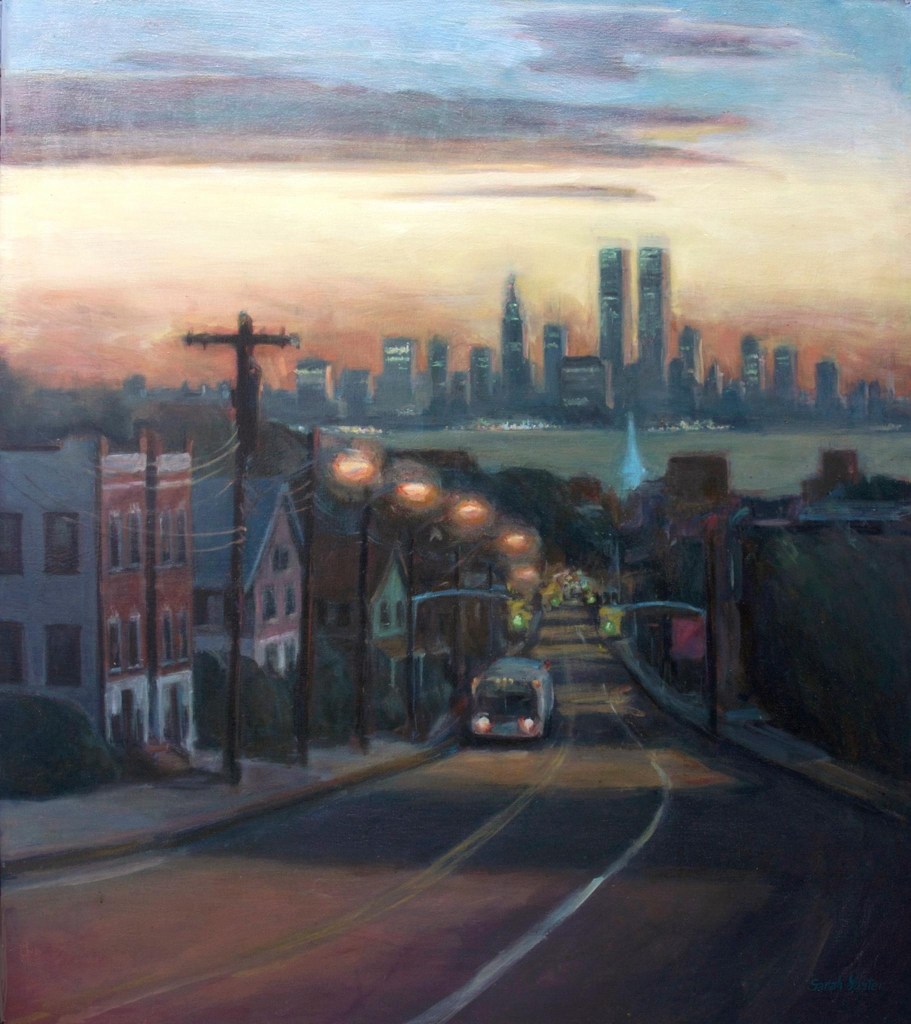
Yuster, now 67, has had a successful career creating pieces such as Victory Boulevard, a painting that brings back nostalgic memories of the iconic Twin Towers at the World Trade Centre (pictured above).
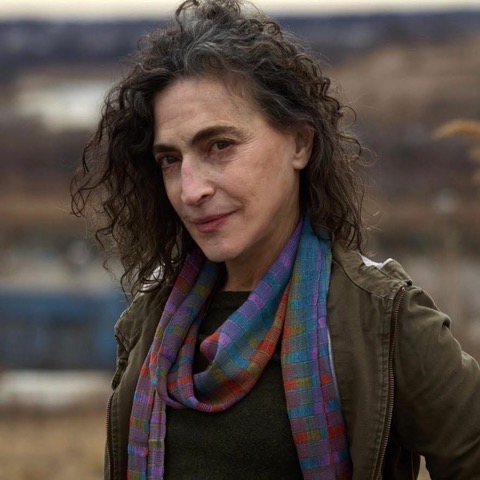
Some of Yuster’s other famous works include a portrait of Nobel Laureate Saul Bellow, which is now in the permanent collection at the Smithsonian’s National Portrait Gallery, and a portrait of astrophysicist Neil DeGrasse Tyson, which is now in the collection of the National Air and Space Museum. She also painted the Pulitzer Prize-winning biologist Edward O. Wilson, which orignally was held at Harvard before being given to Wilson’s alma mater, the University of Alabama.
Yuster tries to use her talent to bring attention to social issues. She has also created documentaries, including Small Truths: The Immigration Experience Through the Eyes of Children, Who Are American Muslims? and Woodland Verse.
Yuster freely talks about her tumultuous childhood. She and her siblings grew up with parents she describes as “fun, interesting, intelligent people, but they were like emotional children.”
She believes her love for drawing and painting steered her from a life of destruction. It continues to anchor her as she now navigates the death of her husband, Robert Mosci, singer, songwriter and producer, who passed away at 72 in December 2025.
Did you always want to be a painter?
My parents were kind of a wreck. I did very well in school, but by the time they finally split, things just started to take a downward turn.
At the time, I wanted to be a wildlife conservationist, but that dream started falling apart. I stopped caring about school, but I did love to draw. A friend at that time told me about a school where you could just draw.
I attended because it was very good for me to get away from home and the nonsense in my house.
I got lucky. A particular teacher told me I had talent. From then on, I loved painting, and specifically, oil painting, more than anything else.
So, I sort of found a world where I had some control. I don’t know if you’ve heard of the book Harold and the Purple Crayon? It’s about a little boy who drew his own world. Sometimes I use that as an analogy to what I did.
I wanted to be a scientist, but instead, I’m just creating my own world, drawing and painting.
What’s your inspiration?
To quote a friend of mine, “You’re lucky when you’re an artist because everything can be beautiful.”
It’s so plain, just the way a car is angled at a curb, or the way light is coming through, or the graphics of certain colors. I think some of it is innate. I don’t tend to look hard for it. I’ll just notice something, and then I’ll go back and sketch.
There’s a lot of beauty in the ordinary. It’s just that I’m paying attention.
You’ve built a career in Staten Island despite its reputation. Was this intentional?
I was always annoyed, as one tends to be wherever you live. There’s always something irritating happening. I would have liked to have left. I always admire when people can leave and restart something new.
But I didn’t have an opportunity for financial and health reasons. I ended up staying here. I did not have the opportunity to do what, you know, art students do – go live in Italy for a while or go to work, all that stuff.
Nothing’s happening in Staten Island that remotely rivals what’s happening in Manhattan. The difference to me is that here you can be an artist and find time to do your work.
If you want to do your art and connect with other artists and feel like part of our community, it’s excellent here.
Are you worried about AI as it relates to your viability as an artist?
No. It has nothing to do with the human process of making art.
I can’t even figure out how to do all the billing and the taxes now that my husband’s gone. I’m more worried about that than I am about AI.
Everybody else can worry about AI.
How does it feel to have your work featured in the Smithsonian?
Having my work in the Smithsonian is great because it gives me clout. I can say it’s there. It puts me on the map, like, “Oh, she has worked with the Smithsonian.”
It doesn’t make me a better artist. It just means that I have my work at the Smithsonian.
What do you hope people take away when they encounter your work?
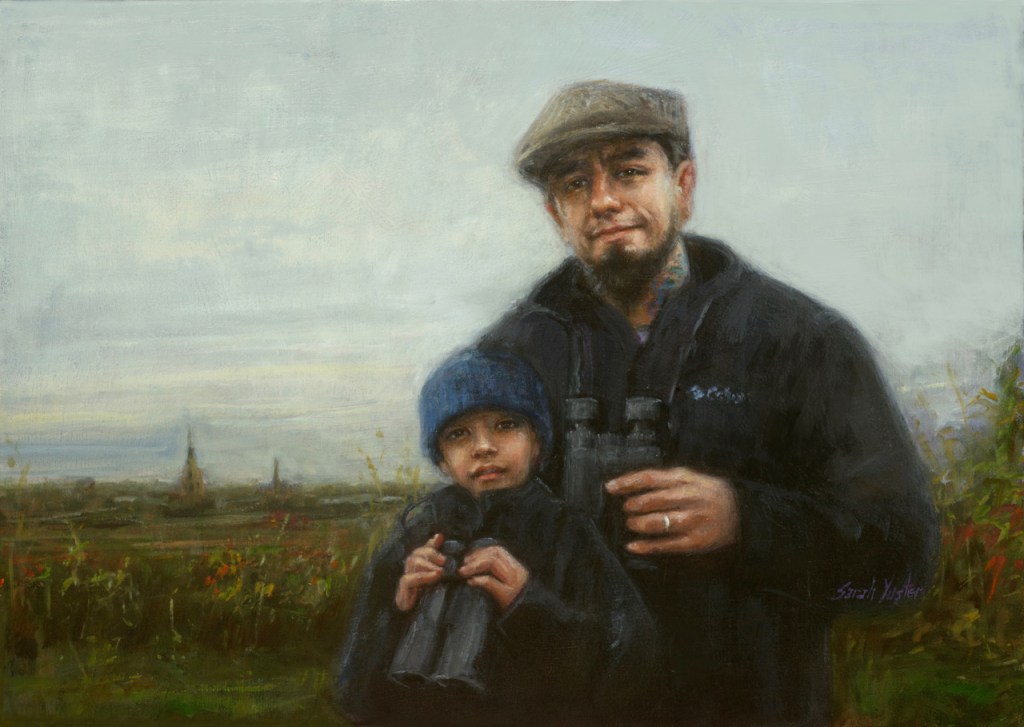
Over the last 15 or 20 years, I’ve been having people buy my work in other parts of the country and just say, “There’s something about your work that just reminds me of home.”
I realized that I’ve been looking for some kind of anchoring for myself, and I’ve been doing that through my work.
My husband, a very sweet, caring person, got a brain tumor. It was just very sudden. Within six months, he was gone. So, that’s been pretty devastating.
But friends of mine lost people they love. They’ll say, “Your art will save you.”
Having that sense of purpose with your work is very helpful.
 Dreams Are Made Of
Leave a comment