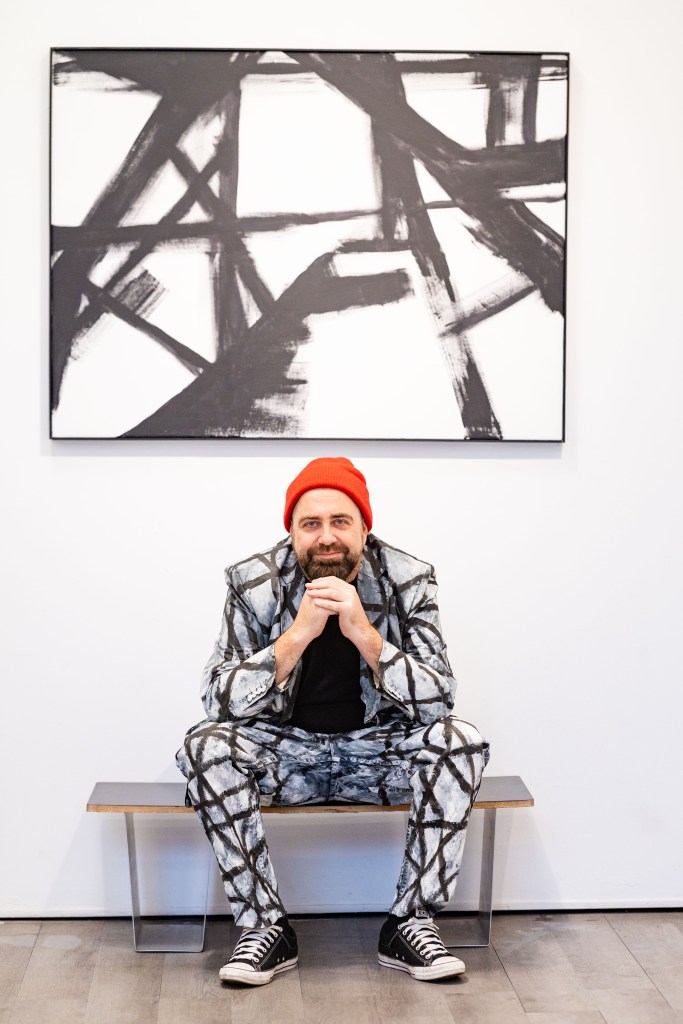
Text by Racquel Miller. Images courtesy of Johnny Thornton.
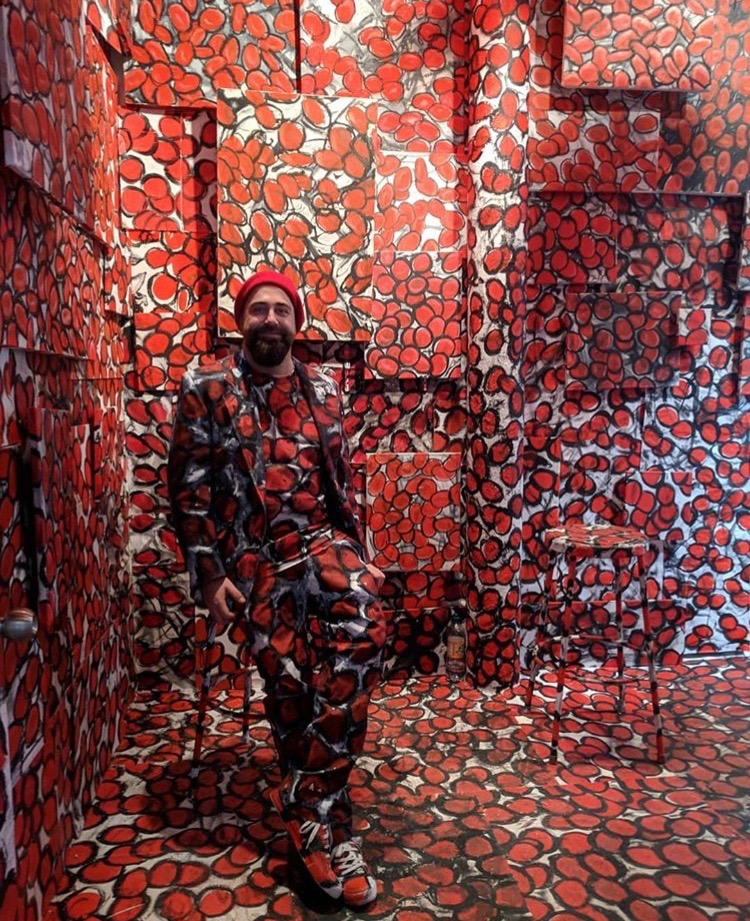
Johnny Thornton’s immersive installation called “Cells” gives you a glimpse into the intricate and complex workings of the human body.
Red blood cells are painted over every inch of wall space, ceiling, floor, furniture and even the artist.
This bold, creative expression was born out of a period of struggle and pain over 10 years ago.
From his home in Brooklyn, Thornton sits on his bed wearing his signature red beanie and a black T-shirt. He takes rhythmic puffs on a vape cigarette. Plastered on the wall behind him is a brightly colored mural of a retro sunset that his wife designed.
Thornton’s early life took a pivotal turn when, at six-years-old, his father, a mining engineer, relocated the family to Johannesburg for a temporary job. This was during a time when apartheid, a system of entrenched racial segregation, was a feature of the society.
While in South Africa, Thornton attended a private school for international students. He wasn’t exposed to the oppression experienced by Black South Africans until he was 11 and his parents integrated him into the South African school system.
“Oh, shit,” Thornton remembers thinking. “This is wild times.”
Thorton says his parents did a good job of shielding him from the realities that existed. He still has fond memories of living there.
His family moved to Arizona when he was 13-years old.
A self-described “little punk rock teenager,” Thorton recalls enjoying the music and art scenes in Arizona.
But he did not start taking the arts seriously until he was in his early 20s.
In 2010, while studying fine art in graduate school at Parsons School of Design, Thornton fell ill. Doctors could not figure out what was wrong with him. He describes experiencing a roller coaster of symptoms – sometimes he was ok, and then other times, he was not, with this condition lasting months at a time.
Despite the early onset of his undetermined illness, the free-spirited artist finished grad school and went home to Arizona. But he quickly became tired of his environment. So, he moved to California with his roommate.
His condition worsened. He was diagnosed with kidney disease. His kidney would fail in the next few years, the doctors told him. Thornton returned home to Arizona again.
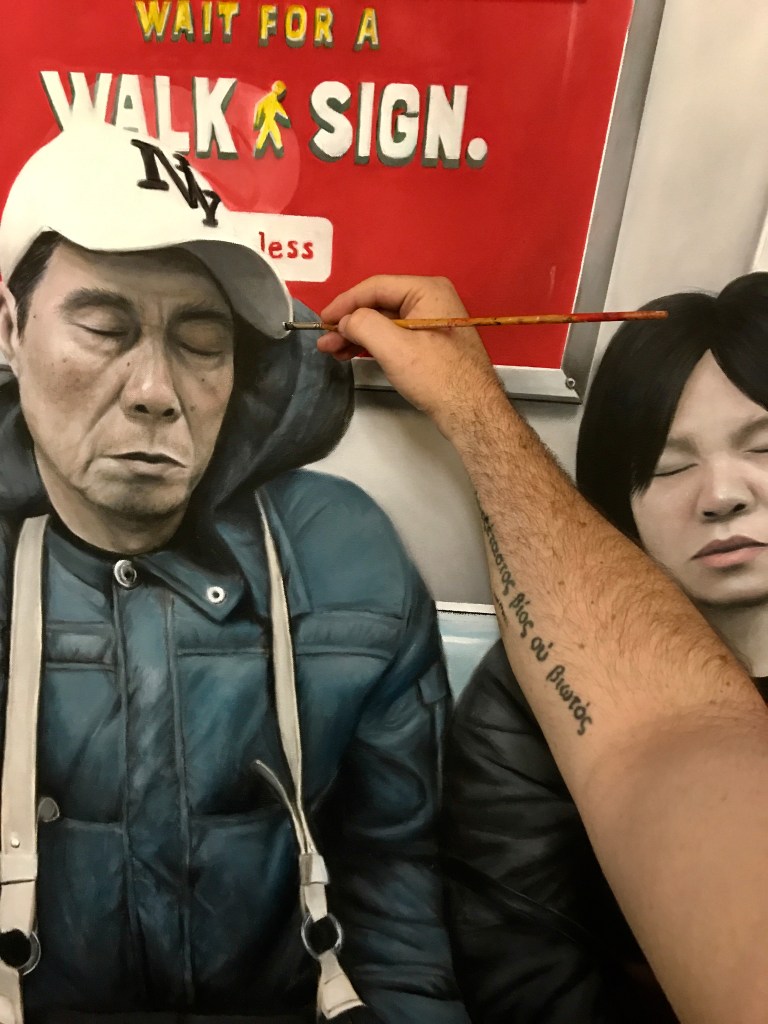
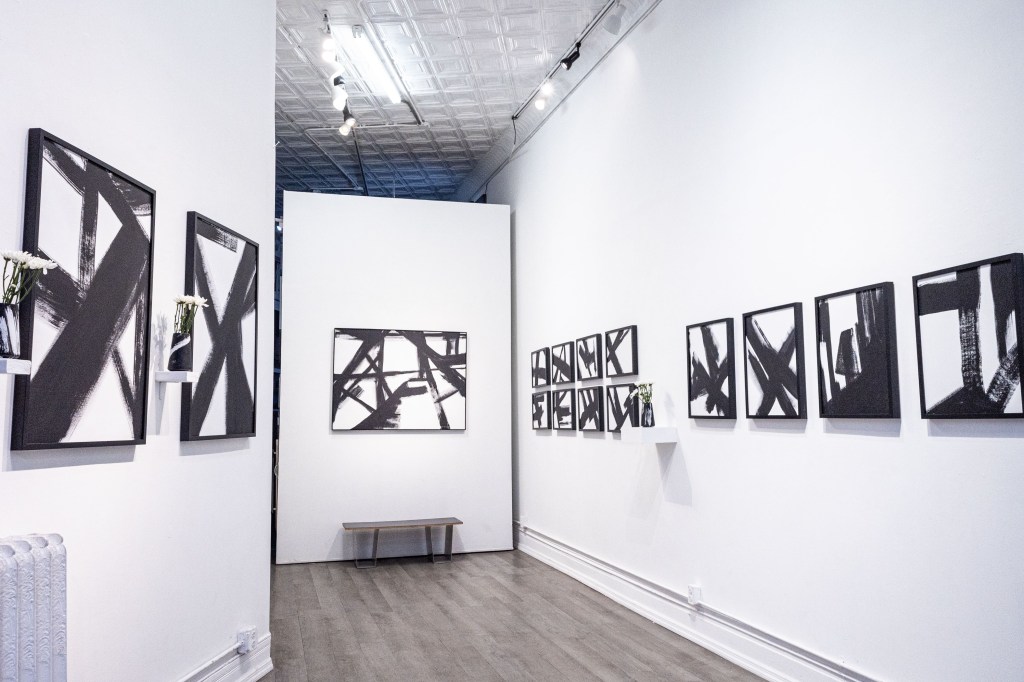
Thornton’s passion for the arts sparked while he rested in bed, looking up at the ceiling with nothing to do. He soon found himself drawing and painting all the time. Through pain and discomfort, he began creating what he described as weird, abstract blood cell paintings, which he found therapeutic.
“I remember being in bed, and I just started doing really realistic painting,” Thornton says between puffs on a cigarette. “They’re meditative. Sometimes art is an emotional catharsis. Sometimes it’s calm. Art always meets me where I need to be.”
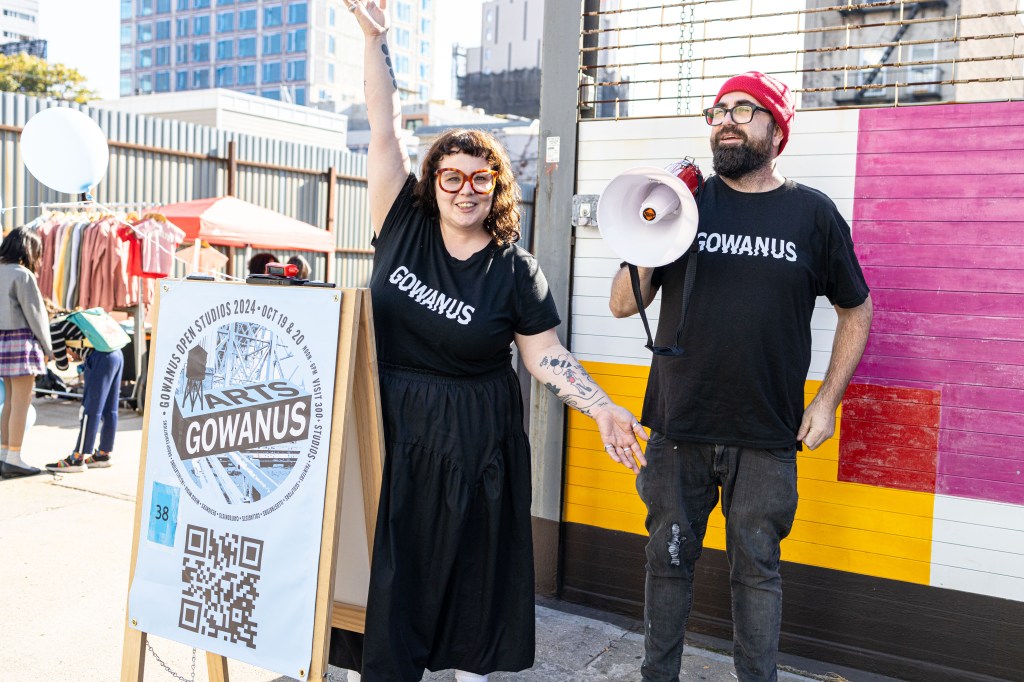
Following a successful kidney transplant in 2014, Thorton moved back to New York. He began volunteering with Arts Gowanus, a nonprofit which supports emerging Brooklyn artists from the Gowanus neighborhood. He became the organization’s executive director in 2020. He now oversees the whole operation, including the annual Gowanus Open Studios event.
Thorton is happy to be a part of this initiative because he understands the struggle it takes to compete for spaces in New York. He remembers moving into a studio and, after four months, getting a note on the door saying he had to leave.
“I was like, ‘I have a lease,’’ he recalls. “And they’re like, ‘Yeah, tough shit.’ Like, what are you gonna do?”
He secured another studio space. The landlord doubled the rent in one year.
“So, it’s like one group of people can afford it,” Thorton says.
Thornton took over Arts Gowanus just as the pandemic started. Soon after, the city passed the Gowanus Neighborhood Plan. Thornton immersed himself in the plan and joined the Gowanus Neighborhood Coalition for Justice, a group that advocates for affordable housing for local residents. Thornton says he learned a lot about advocacy and activism, especially when the group banded together to ensure full capital repairs of all New York City Housing Authority properties.
Thornton wanted this type of outcome for arts and cultural spaces as well, but he was the only artist in the group. Seeing more and more artists being priced out of Gowanus frustrated Thornton.
He eventually advocated that the rezoning project should include affordable studios. He worked alongside developers to create the community benefit agreement. Under Thornton’s leadership and activism, Arts Gowanus reserved 22 rent-stabilized art spaces for artists, with 100 more expected to open in the next two years, all offered through a lottery system.
Although the mission was a success, Thornton encountered resistance from fellow artists because of the plan’s partnership with developers.
Thornton argues that changes in New York’s landscape are inevitable, noting that Soho, Williamsburg and other art neighborhoods have changed so much that it makes it almost impossible for young artists to afford those spaces.
“Instead of throwing rocks at an oncoming train that affects change,” Thornton says, “I’m just trying to move the tracks a little bit.”
Thornton’s partnership opened a door that would have otherwise remained closed, he argues. He hopes this example can be used in the future to foster inclusive and diverse communities.
“Gentrification has a lot of different elements but loss of community is the biggest,” Thorton says. “With loss of community, identity is what always goes first.”
Thorton believes that art is a catalyst for building stronger communities. He advocates for keeping a neighborhood’s identity, and he stresses that affordability is the way to keep that community intact.
 Dreams Are Made Of
Leave a comment