Text by Sage West.
In 2001, everybody had a Balenciaga City Bag. Well, everyone who could afford one.
And if you didn’t have one, you wanted one.
Nicholas Ghesquière’s creation, which was born as the Motorcycle City Bag and later shortened to City Bag, launched 25 years ago during his time as creative director of the brand. It was part of a collection of 10 other motorcycle styles.
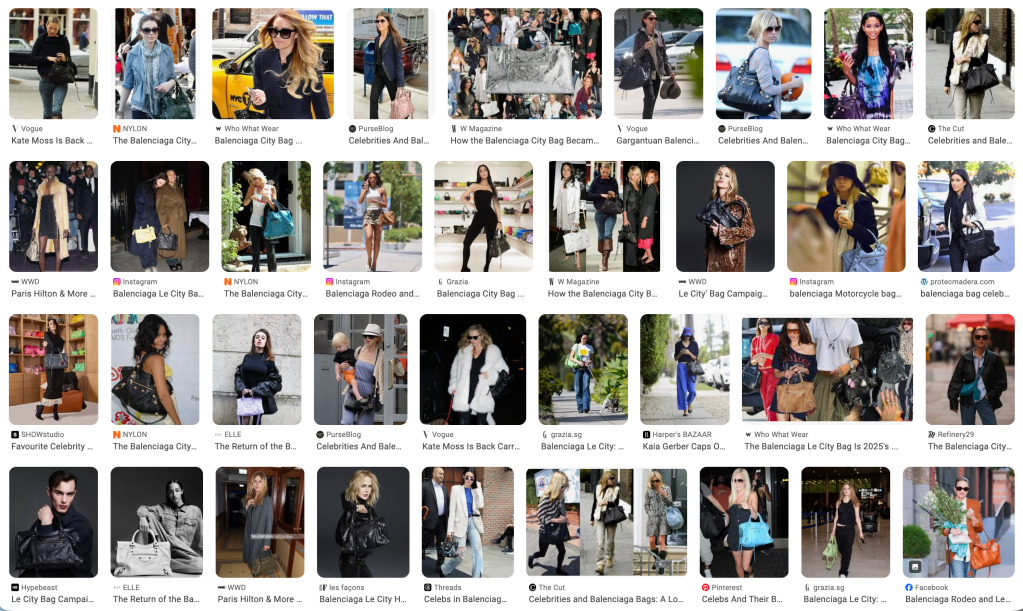
Despite initially receiving pushback from critics for its laid-back, loosely structured design and lack of logo, nearly every early 2000s it-girl was eventually photographed sporting a city bag. In the pre-social media influencer era, Balenciaga gifted the bag to socialites. The city bag was carried by the likes of Kim Kardashian, Paris Hilton, Kate Moss and the Olsen twins – who famously over-stuffed their pistachio-shaded satchels.
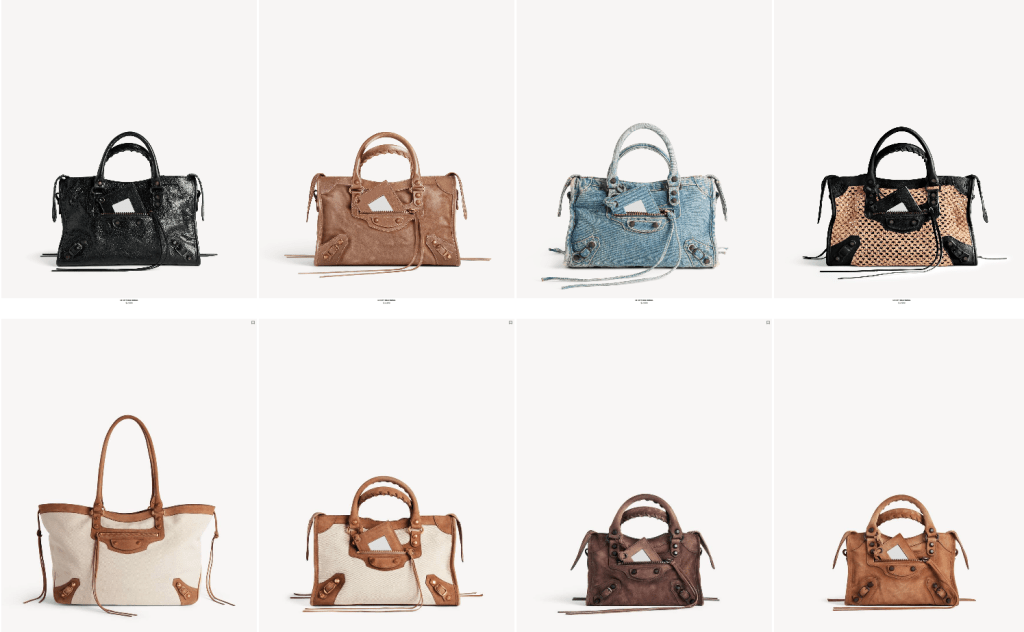
Ghesquière designed the bag to be filled and worn, and it possesses a lived-in aesthetic straight out of the package. Made with lambskin, the bag is classified as genuine leather. The texture is distressed and rugged, and its structure is floppy. Tassels hang from the sides, adding an eclectic element to the design, while silver studs and zippers embellish the bag’s face.
It was designed to complement the signature Bohemian grunge look of the early 2000s, when your pants were too baggy, your sunglasses were too big for your face, your neck and wrists were less than carefully adorned with textured necklaces and clunky bangles, and your shirt was slouched ever-so-carelessly off of your shoulder.
Your City Bag lived in the crease of your elbow, and not an inch higher.
It also cost $1000.
And like the infamous Hermes Birkin, the way you wore it presented as a status symbol, a competition of sorts in appearing carefree. Can you afford to toss your City Bag on the ground? Or stuff it to the brim? Or can you at least afford to look like you don’t care – and don’t care that your too expensive lambskin leather bag is hitting the sidewalk, or that the corners are aging too quickly from daily wear?
In 2019, Vogue writer Liana Satenstein described the bag as her “first love.”
Many are still deeply in love 25 years later, including girls who were prepubescent at the time of its launch and are now shopping for a bag of their own.
Today, you can’t scroll on TikTok without seeing at least one “What’s In My Bag” video featuring a City Bag, or a replica of it.
Women ages 18 to 30 are casually sporting and filling the bag as if it were 2001.
Yet, the 2026 twist comes with charms decorating the bag’s handles, and plushies like Kasing Lung’s Labubu, Sanrio’s Hello Kitty or a Monchichi hanging next to its tassels.
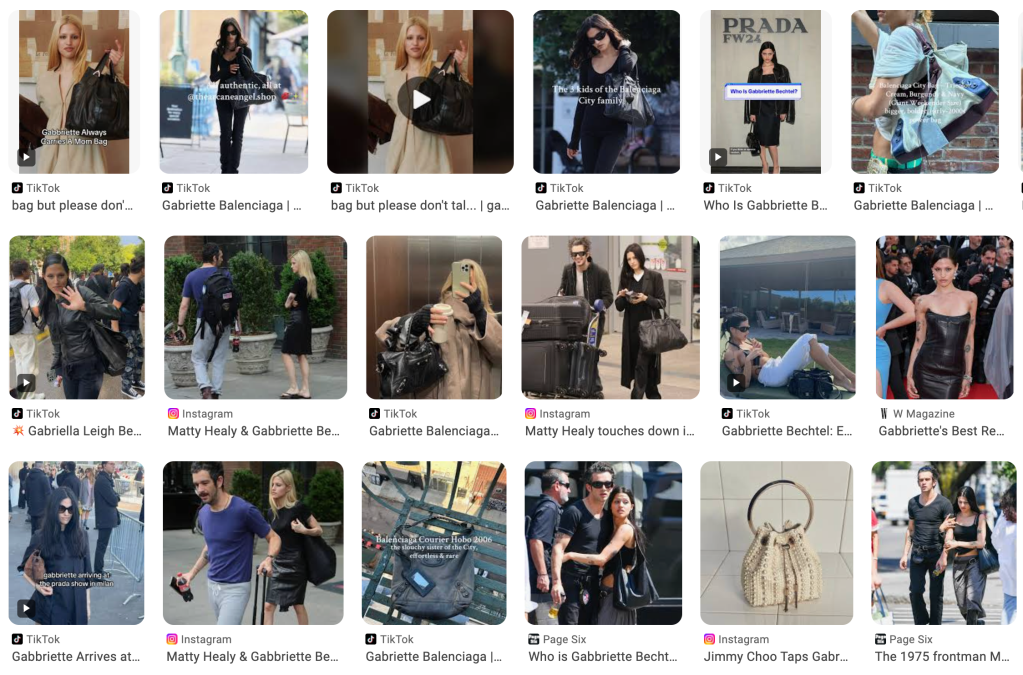
It’s worn by Gen Z “it girls,” influencers across social media, like Gabriette Bechtel, and celebrity models like Bella Hadid. They channel the spirit of Gossip Girl’s Jenny Humphrey, aka Taylor Momsen, with every wear.
In many ways, this generation’s “cool girl” is simply a kindred spirit of the early 2000s socialite wearing the City Bag when it dropped 25 years ago.
After experiencing such a resurgence in popularity, Balenciaga released re-imagined variations of the bag with their “Le City Bag Campaign” in 2024. Then, Balenciaga creative director Demna Gvasalia launched Le City Bag with the intention to revive the bag – and likely capitalize on its rise in demand – with a new and improved structure.
As a promotion for the bags relaunch, Balenciaga replicated paparazzi photos, featuring the early 2000’s icons who wore it first, including Nicole Richie, Paris Hilton and Kate Moss.
Now, on the eve of its 25th anniversary, the highly coveted bag is available to everyone who can afford its $3000 price tag, and to those who can’t – nearly every fast fashion store has its version of a city bag.
Dupes of the City Bag have swarmed the internet in recent years, with retailers like Free People and Urban Outfitters selling knockoffs for as little as $70. Meanwhile, authentic vintage Motorcycle bags are selling on reseller sites like Depop and eBay for upwards of $2000.
Maybe the bag’s carefree nature is attractive to today’s generation, who have been burdened with war, pandemics and Donald Trump. It’s like a tangible symbol of escapism worn by a generation that tries hard to seem low-effort, dressing up all nonchalant with a faux fur coat in the name of looking “cool.”
And with recession-core fashion having its own renaissance, as was the case in the early 2000s, its form is just relaxed enough to appear unbothered by the decaying socioeconomic state of the world.
Its large size is suitable for the rising trend of maximalism, while remaining just lightweight enough to be schlepped around the city.


Leave a Reply