Text by Nia Engrassi.
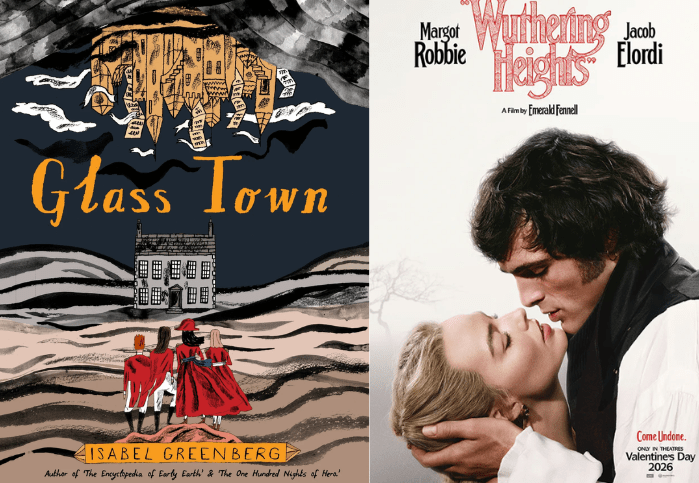
Hollywood isn’t a stranger to unconventional interpretations of classic texts. Emerald Fennell’s “Wuthering Heights” is one in around thirty adaptations of Emily Brontë’s classic.
This time, the director wanted everything. She wanted new themes, Jacob Elordi, herself on screen but played by Margot Robbie. She wanted sex —and she wanted the title.
She wanted it all, and nowhere on the list did she include being faithful to the actual text.
The question isn’t whether she was right to insert herself. It is how she did it.
Cinematographically, the film is beautiful to watch, a consensus held by audiences, from Letterboxd to RottenTomatoes, to the editorial world. But not even Margot Robbie and Jacob Elordi’s chemistry is electric enough to snap the viewer out of feeling like they’re reading trashy fan fiction.
In a world with enough Emerald Fennells, willing to disregard source material to reshape it through their personalist dictatorial authorship, there is bravery in becoming an Isabel Greenberg, someone who builds new imaginative spaces, expanding on literary tradition without eclipsing it.
Greenberg is a London-based writer and illustrator who earned recognition for her historical and myth-inspired graphic novels. She is also a lecturer at Kingston School of Art, and is currently working on her fifth graphic novel, Confinement, set to be published in 2028.
But there is one particular work that should claim her a space in this year’s Brontë discussion, and that is Glass Town (2020). The graphic novel draws on the worlds that would later become part of Brontë canon, where a young version of the four siblings puts pen to fictional paper to create an escape from the reality of losing their older sisters. The novel weaves through a combination of quotes from original Brontë texts but it never shams itself into deserving the title of adaptation.
Greenberg invites us along in a world that is as much hers as it is the Brontë’s, and she does so without alienating us in the process.
There is powerful potential in what Fennell is doing – adapting to provoke, but I personally wouldn’t hold her intentions with such regard. What is Fennell using Wutherhing Heights to say? That desire is, or can be, destructive? Brontë already said that. Or perhaps that obsession can be romantic if aestheticized for a modern gaze?
In any case, Fennell does not commit to a single idea, except, of course, Jacob Elordi’s fingers in Margot Robbie’s mouth.
For Greenberg, the possibilities are truly endless. As an author, she seems to understand that it is possible to interact with classic literature without trying to dominate it, or overwrite it, or, perhaps a little bit unfairly, use it to stroke your own ego.
Rather than treating Brontë’s imagination as raw material she can bend to resemble herself, she creates around it, writing stories that can grow from and beside it.
Not every reinterpretation needs to bastardize the source to feel original.
 Dreams Are Made Of
Leave a comment